2026-09-04 ·
Managing Storm Debris with Dumpster Rental After Kansas City Weather
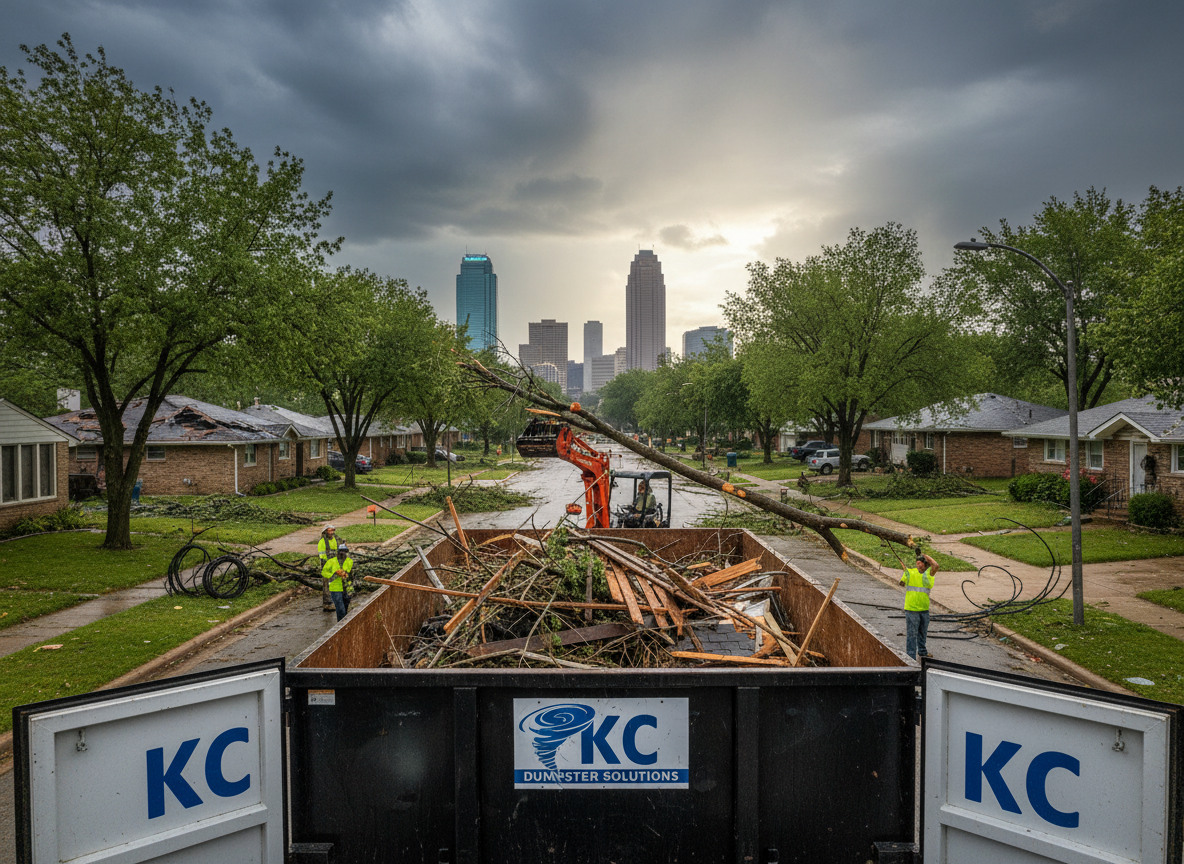
After a severe thunderstorm in Jackson County, a 20- to 30-yard dumpster rental typically clears debris from a typical Midtown or Hyde Park home within 2 to 4 days when delivery occurs the same day.
Assessing Debris Types from Local Thunderstorms
Kansas City experiences frequent severe thunderstorms that drop large limbs, roofing shingles, and saturated yard waste across neighborhoods such as Brookside, Roanoke, and the Crossroads. Older housing stock in these areas often features mature trees whose branches break under high winds and heavy rain, while homes near the Nelson-Atkins Museum of Art or Kauffman Center for the Performing Arts may see additional metal and insulation debris from roof repairs. Soil conditions in the East Bottoms and River Market stay saturated longer after storms, making it harder to move heavy loads without rutting driveways. Operators familiar with these patterns stage roll-off containers on firm surfaces like gravel pads or reinforced driveways to avoid sinking. Homeowners in Valentine and Waldo report that separating metal from organic debris speeds up unloading and keeps loads within weight limits for transport out of Jackson County.
Selecting Dumpster Sizes for Storm Cleanup
Choosing the right container size prevents overflow and extra trips when managing mixed storm debris. A 10-yard roll-off works for small branch piles from a single property in North Kansas City, while 20- and 30-yard units handle full roof sections plus yard waste common after storms near Arrowhead Stadium and Kauffman Stadium. Choosing Dumpster Size for Kansas City Home Projects outlines volume calculations based on local tree cover and home age. Overloading occurs quickly when wet leaves and shingles are combined, so crews recommend filling to the marked line and scheduling a second container if needed. In Independence and Lee’s Summit, where lots tend to be larger, 40-yard units sometimes prove necessary for complete cleanups following back-to-back thunderstorm events.
Placement Considerations in Kansas City Neighborhoods
Proper container placement avoids street obstructions and respects local terrain in dense areas like the Country Club Plaza, Westport, and Liberty Memorial surroundings. Steep driveways in Hyde Park require chock blocks and plywood under wheels to prevent rolling during loading. In the Crossroads and River Market districts, narrow alleys limit access, so 24/7 scheduling allows evening deliveries when traffic is lighter. Operators check for overhead wires and low branches before positioning, especially near the World War I Museum grounds where mature landscaping is common. Homeowners in Waldo and Brookside often request weekend drops to align with daylight hours for safe debris hauling before the next cold front arrives.
When Additional Removal Supports Debris Management
Some storm jobs exceed standard dumpster capacity when flooding affects basements or multiple properties in one block. Junk Removal crews handle oversized items such as waterlogged furniture or fencing that cannot fit roll-off containers. Residents near Lee’s Summit or Independence frequently combine services after prolonged wet periods that soften soil and complicate manual loading. Winter Dumpster Rental Tips for Kansas City covers cold-weather adjustments that also apply when late-season storms hit. Coordinating both services keeps projects moving without repeated site visits across Jackson County.